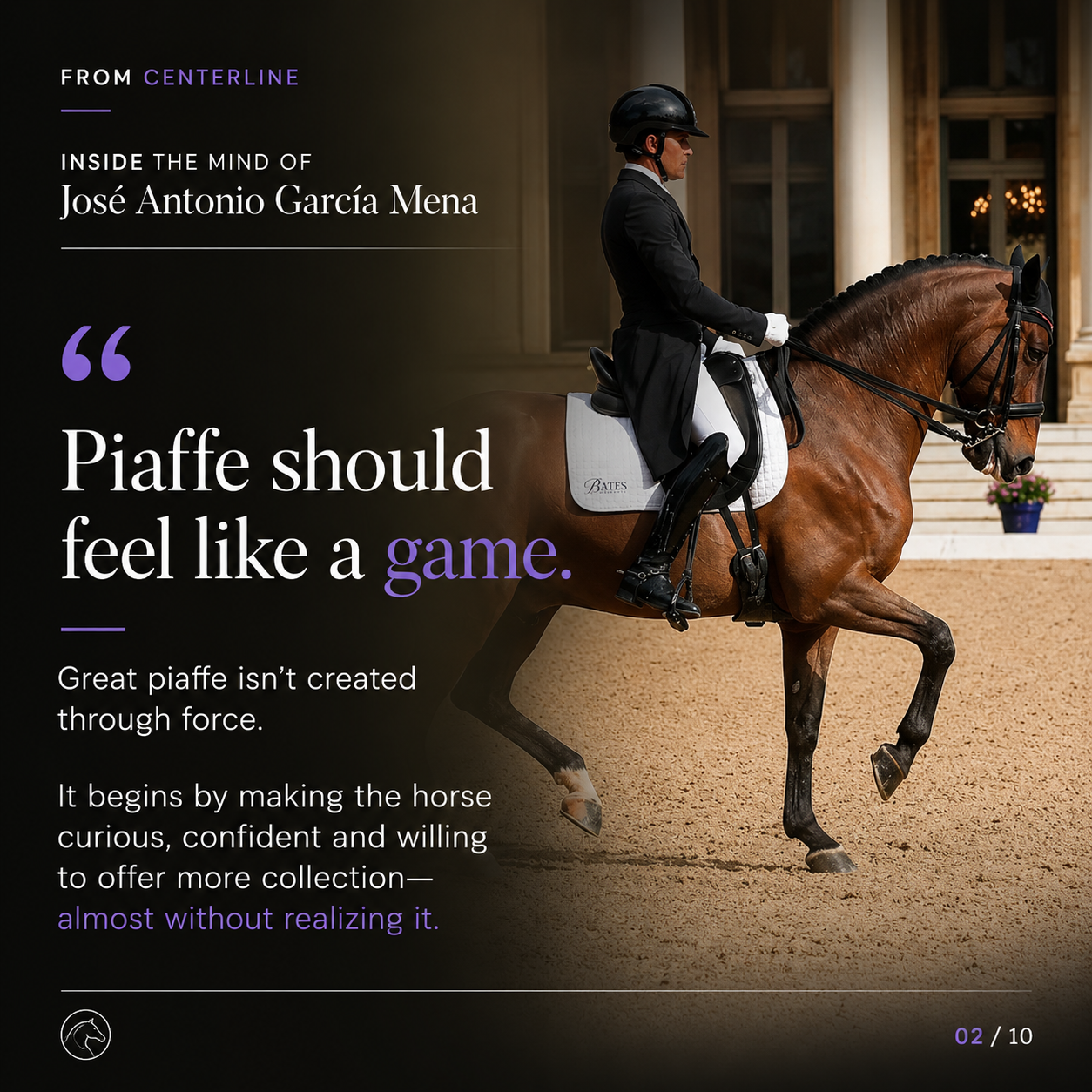
Piaffe should feel like a game.
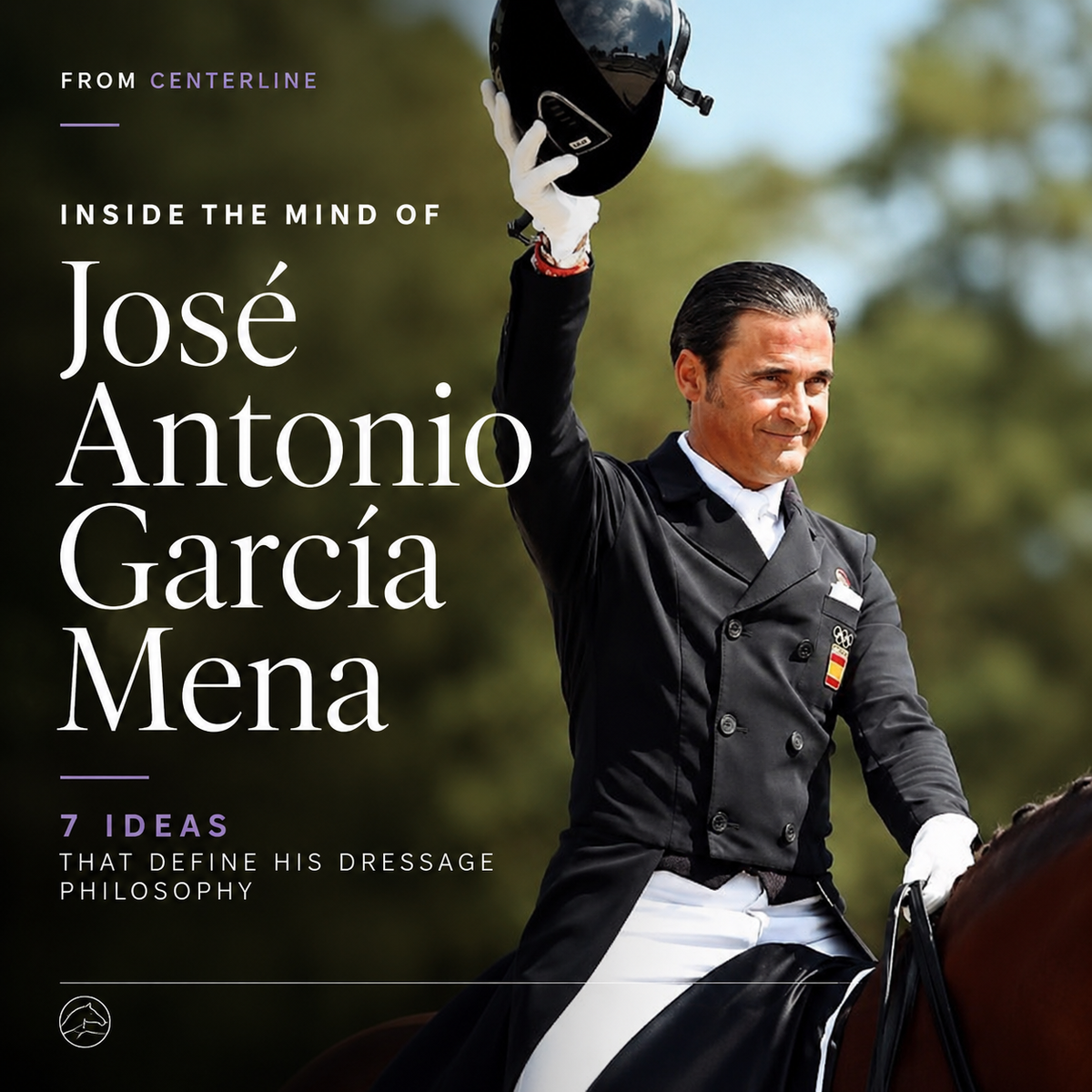
José Antonio García Mena has spent decades at the highest level of international dressage, representing Spain at the Olympic Games, European Championships, and Nations Cups, while earning worldwide admiration for the quality of his riding—particularly his piaffe, which many consider among the finest in the sport.
In this conversation with From Centerline, García Mena shares his philosophy on developing piaffe, training young horses, helping Isabell Werth refine piaffe and passage, handling championship pressure, and the principles that have guided his career.
From Centerline:
Your work in piaffe is widely admired and often considered among the best in the world. What is your philosophy when developing piaffe, and what are the key principles you always come back to during the training process?
José Antonio García Mena:
Thank you very much.
For me, piaffe must always be developed through the horse’s naturalness and confidence. I always try to introduce it almost without the horse realizing it—almost like a game. I do not try to impose the exercise from the beginning, but rather awaken the horse’s curiosity and willingness to offer more and more collection.
Every horse has its own timing and natural abilities, and I strongly believe in respecting that process. Some horses understand the exercise earlier, while others need more physical or mental maturity, but the important thing is that they never experience it through stress or pressure.
The principles I always come back to are relaxation, looseness, and confidence. The horse must feel comfortable and secure while learning. Little by little, as the horse understands the work and gains strength, the piaffe begins to appear with more expression and quality.
But for me, the foundation is always the same: patience, sensitivity, and a great deal of feel.
From Centerline:
Following that, what do you look for in a young horse that makes you think it will have a good piaffe, and what are the most common mistakes riders make when trying to develop it?
José Antonio García Mena:
In a young horse, what immediately catches my attention is how the whole body reacts when I apply the first aids. A horse that has natural talent for piaffe connects the entire body from the very first moment.
One of the most common mistakes I see is riders trying to “force” the horse into piaffe too early or with too much pressure. That is often where the problems begin. The horse must understand piaffe as just another exercise within the work, not as a threat or an uncomfortable situation.
You have to reward good steps constantly, even the smallest improvements, and never punish the horse when it does not understand something or is not yet physically capable of doing it. If the horse associates the exercise with tension or fear, it becomes very difficult to rebuild that confidence later on.
From Centerline:
You have worked closely with Isabell Werth for many years. How has that collaboration influenced you, and what do you think she may have taken or learned from your way of working?
José Antonio García Mena:
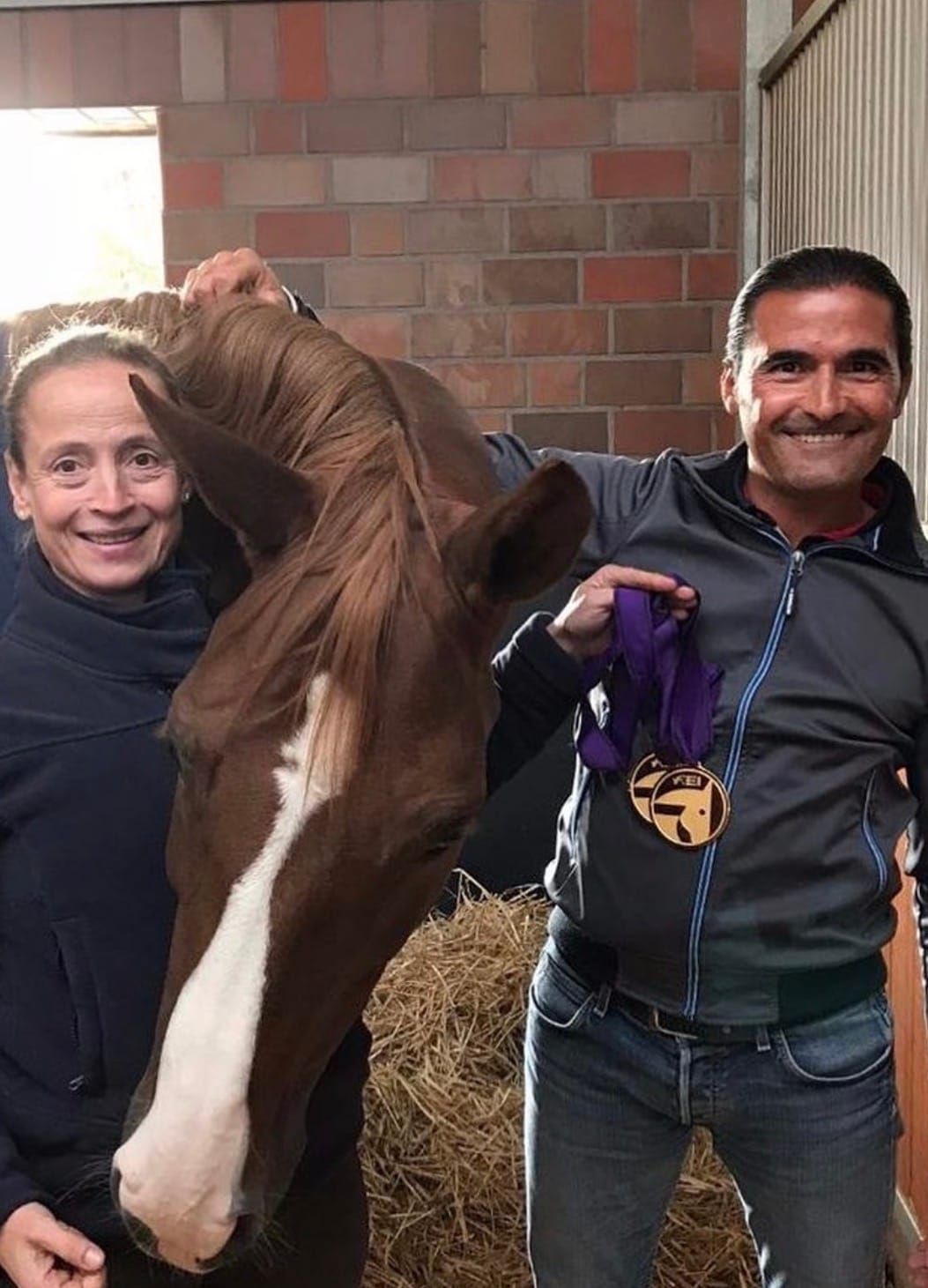
For me, being around Isabell is one of the greatest gifts God has given me.
I have admired her since I was young, and I still feel butterflies in my stomach every time I arrive at her stable each month.
She has influenced me enormously, both personally and professionally. Watching her ride over the last fifteen years has been one of the most enriching experiences of my life. I always learn something from every visit.
God touched Isabell with His hand, and I truly believe there will never be anyone like her. We are simply very lucky to be able to enjoy her greatness from so close.
And beyond that, she is also my best friend.
From Centerline:
You have ridden and developed many different types of horses—PREs, Lusitanos, Warmbloods, among others. Do you adapt your system depending on the type of horse, or do you believe in one consistent method for all? And personally, do you feel a stronger affinity with a particular type?
José Antonio García Mena:
I believe every good rider must understand that every horse is completely different. Not only because of breed, but also because of character, sensitivity, physical structure, and learning style. So yes, I adapt the work a great deal depending on the horse I have in front of me.
The foundations of dressage are the same for all horses: respect, balance, impulsion, collection… but the path to achieving those things changes significantly depending on the horse. Some need more calmness, others more motivation, others more physical time. The important thing is knowing how to listen to the horse and adapt the system to its needs.
I have had very rewarding experiences with horses of many different breeds, so I keep the memories without thinking too much about the pedigree.
These horses have allowed me to live experiences that I could only dream about as a child.
From Centerline:
You have represented Spain in numerous championships and team competitions. How do you personally manage pressure in those moments, and has your approach changed over the years?
José Antonio García Mena:
Pressure always exists when you are representing your country, and I actually believe it should exist, because it means you truly care about what you are doing. But over the years, you learn to manage it differently.
I always try to trust the work done at home. Once you arrive at a championship, the work is already done. In the arena, you simply have to go in, trust yourself, trust your horse, and allow everything you have prepared over months to flow naturally.
Perhaps in the past I experienced those moments with more nerves and tension. With experience, you understand that you cannot control everything, but you can control your preparation, your attitude, and your connection with the horse. In the end, that is what gives you peace of mind.
From Centerline:
After so many years at the top level of the sport, what continues to motivate you every day?
José Antonio García Mena:
What continues to motivate me the most is the horse itself. That passion has remained intact since the very first day.
After so many years, I still deeply enjoy the daily work, developing horses, feeling their progress, and constantly trying to improve myself.
I am also very motivated by the excitement of owners when they see their horses improving, by the energy of my team, and by the support of the people who accompany me on this journey, including sponsors.
At the end of the day, this sport is very hard and demanding, but when you truly love what you do, you always find reasons to wake up every morning excited to work.
From Centerline:
What advice would you give to young riders who look up to you, and what do you wish you had learned earlier in your career?
José Antonio García Mena:
I would tell them to understand from the very beginning that nothing in this sport is given to you. It is a very long and demanding road where patience is essential.
I would also tell them to always try to learn from great masters and never believe they already know everything. Humility is extremely important in equestrian sport because horses are constantly teaching you.
And above all, work with discipline, heart, and respect for the horse. Technique is important, of course, but without sensitivity and genuine love for the horse, it is impossible to truly go far in this sport.
Throughout this conversation, one idea appears again and again: great dressage is not built through force, shortcuts, or rigid systems.
Whether discussing piaffe, young horses, championship pressure, or a lifetime of learning, José Antonio García Mena consistently returns to the same principles—patience, humility, feel, and an unwavering respect for the horse.
Perhaps that is why his horses are admired not only for what they can do, but for how they do it.
At From Centerline, we believe the best conversations are those that leave us thinking long after they end. We hope this interview offers riders of every level not only practical insights, but also a reminder that true horsemanship is measured as much by character as by results.